LISBON PUBLIC TRANSPORT

Published April 2026
There is nothing more life-affirming than walking around Lisboa and soaking up all that europey-europeness, knowing it’s now home.
However, there’s always those pesky hills. It’s enough to do even the fittest person in and when it rains the beautiful calçadas (the black & white cobblestone paths) become a slippery deathtrap.
Luckily, Lisbon’s public transport system is decent. The city has a wide variety of public transport: metro trains, urban trains, buses, trams and ferries. We even have a couple of funiculars (though a recent tragedy made worldwide news). So there are plenty of options to get you around and your Bestie is here to help you figure it out.
Bestie Note: I am currently working on separate pages for Taxis & Uber/Bolt, Personal Drivers & Car Hire. Follow me on social media to know when new pages are published.
Metro Trains
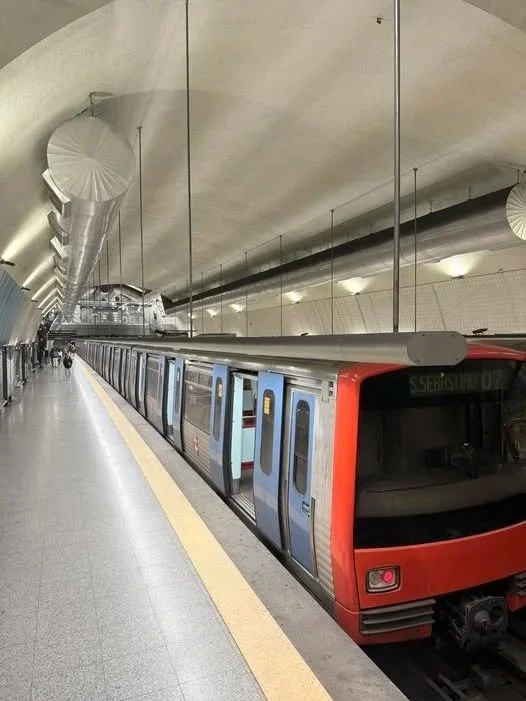
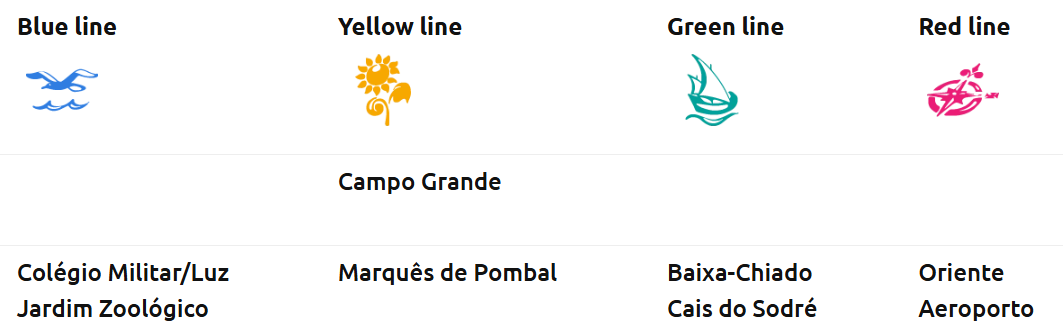
The Lisbon Metro consists of 54 stations covering four lines: Azul/Blue, Verde/Green, Vermelha/Red, and Amarela/Yellow
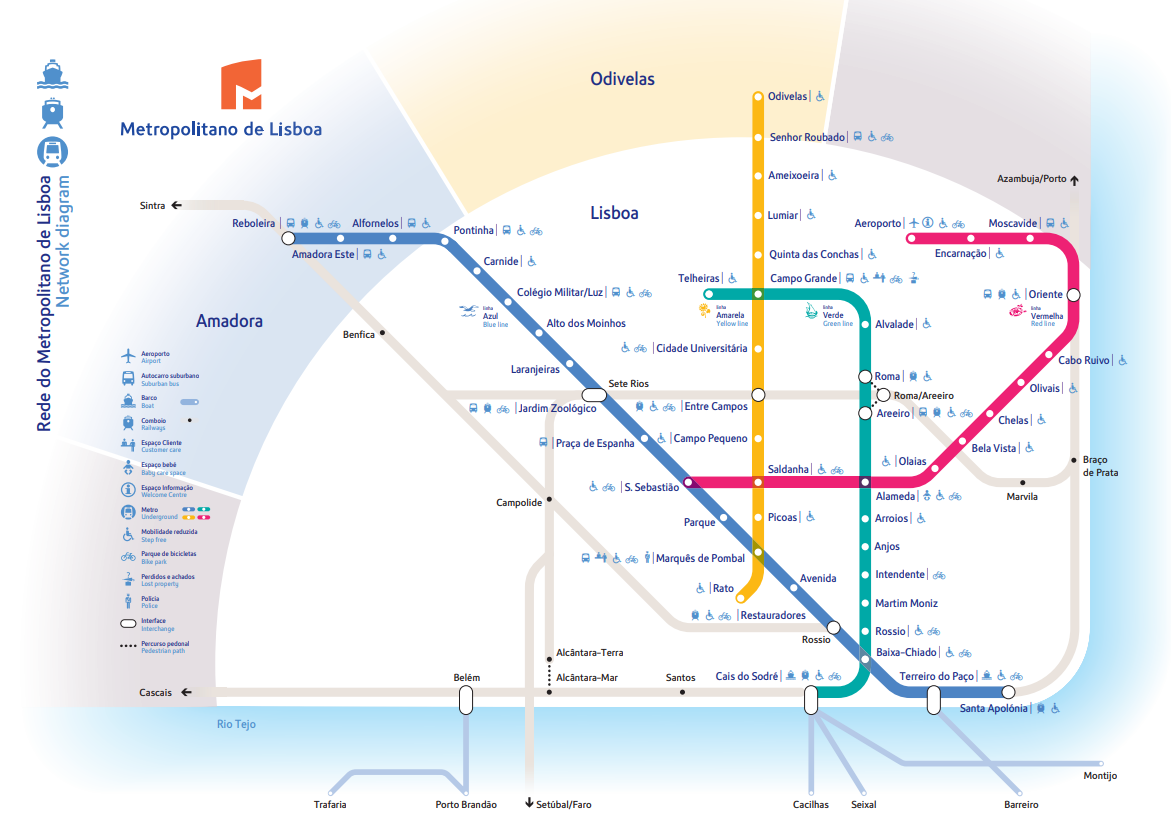
The metro operates from 6:30 a.m. to 1:00 a.m, and trains run every six to twelve minutes, depending on the time of day. The metro tends to be more reliable than the urban trains but be aware that peak hour can be uncomfortably jammed with the Lisboeta workforce. Especially take note if you plan to be on the Red Line with luggage for the airport at those times.
Company: The metro is run by Metropolitano de Lisboa, E.P.E..
Timetables: Via this page on the website. (There is an app for Android & Apple, but if you can work it out, you’re far smarter than I am.) They’re frequent enough that most of us just rock up and get the next one.
On & Off: Swipe your ticket, credit card or Navegante card once to access the metro rail line. At your final destination you’ll swipe your card again to exit.
Bestie Note: They are working to connect Rato to Cais do Sodré with the inclusion of Estrela & Santos stations which would be brilliant…but it’s been going on so long, with deadlines of years ago still not met so it’s become a major eye-roll among residents. Currently scheduled for operation in “1st trimester, 2027”. Whatevs.
Urban Trains
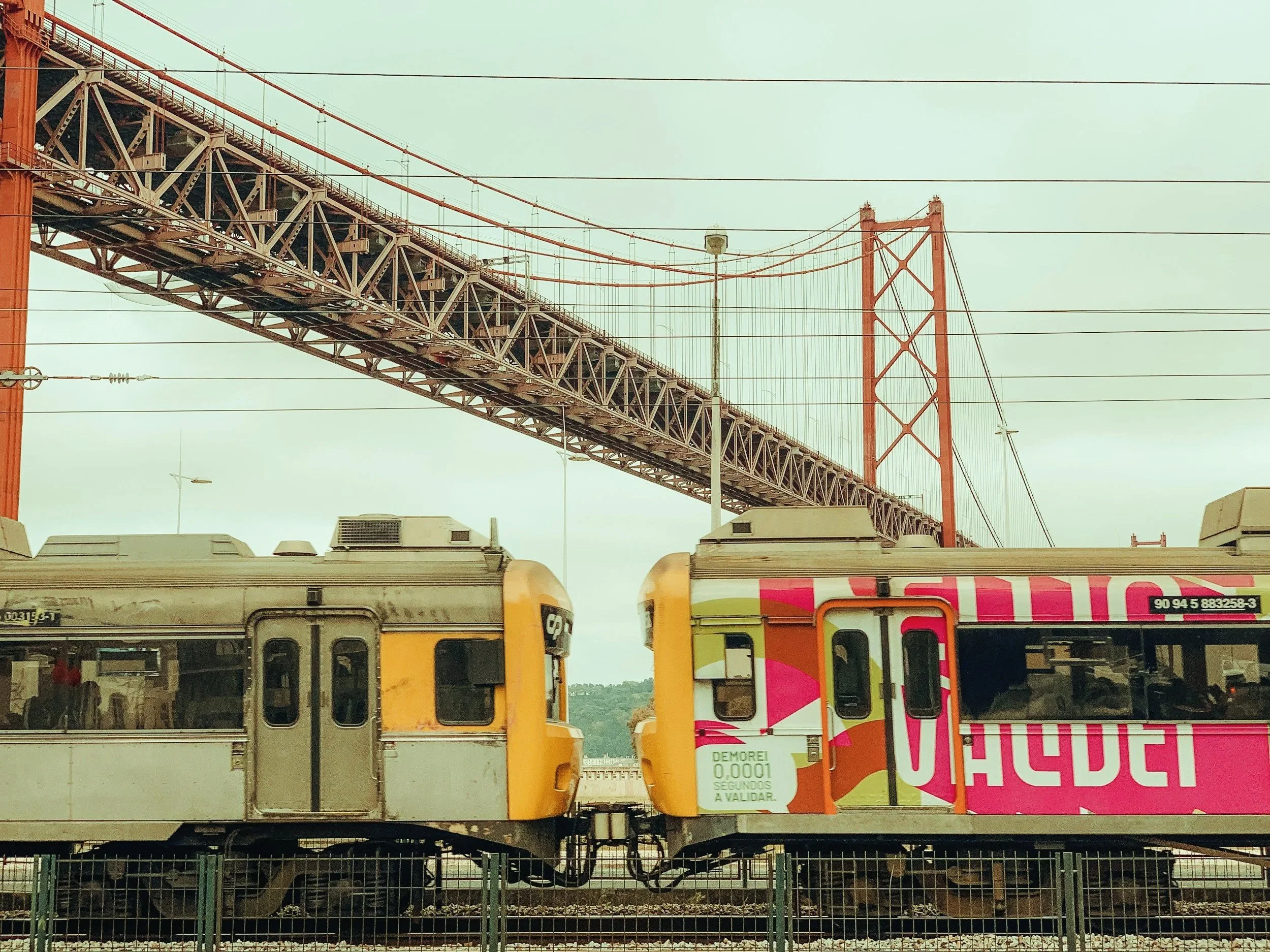
The urban train network connects the city to the wider metropolitan area such as Oriente, Sintra and Cascais. (Belem is on the Cascais Line). There’s also the Sado line over the river.
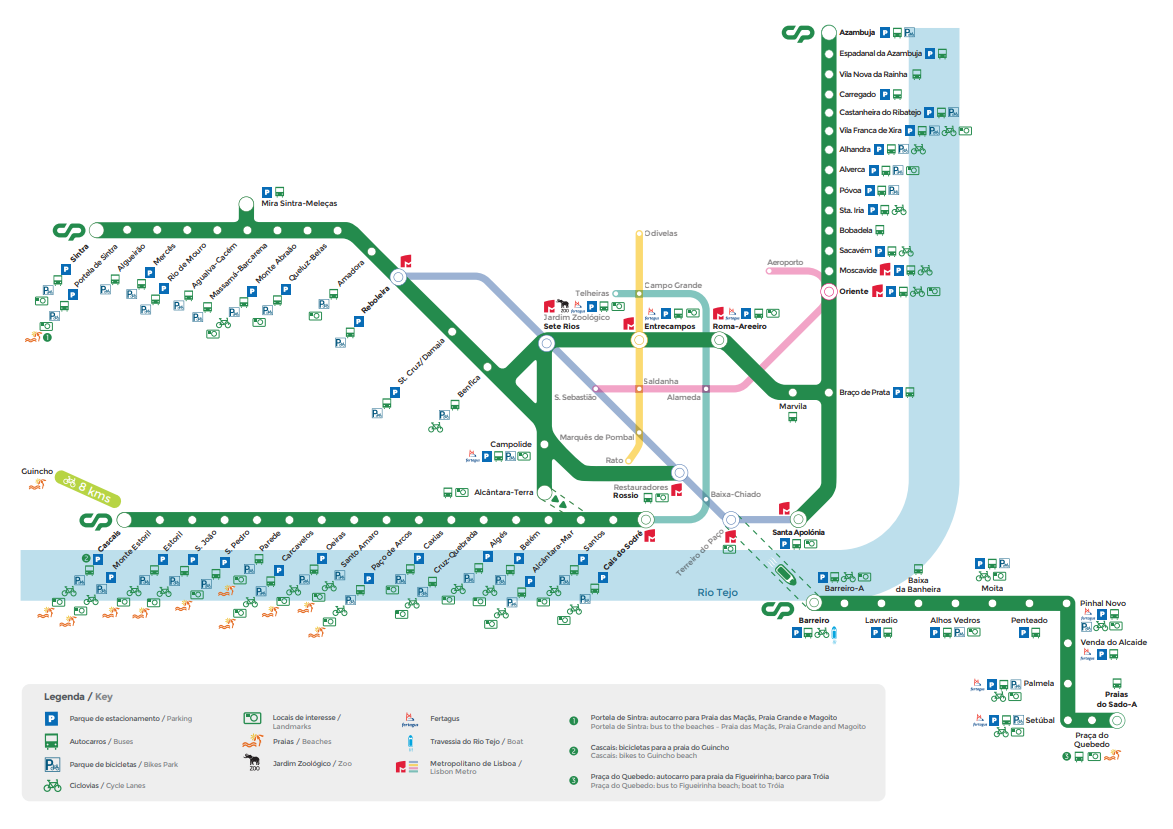
I use the Cascais line regularly. Trains are often late (and sometimes don’t turn up at all) with no explanation ever given. The Cascais line can also gets crazy crammed in summer with beachgoers.
This company frequently have a worker’s strike, so it’s useful to check their website/apps for updates if planning an important trip.
Company: Comboios de Portugal (or simply CP). They are also resposible for the long distance lines trains to places like Faro & Porto.
Timetables: The easiest option is by the apps Android or iOS. Otherwise you can plug in your desired location online here. There are also these timetable pdfs. (You can book tickets for further destinations like Porto or Braga on the app or online.)
On & Off: Even if your station doesn’t have a barrier you still need to pay or validate your pass at check-in poles at the station entrance or on the platform. Inspectors are regularly on board to check your tickets, if the machines to tap on are broken (e.g the ones at Alcântara-Mar are almost always busted) just tell the inspector and they will charge the ticket price on the spot.
Bestie Note: If headed west along the Cais Do Sodre <> Cascais line, be aware that some trains are “faster”/“SARP” meaning they only stop at selected stations (including skipping Belem), and some trains are “all”'/“TODAS” meaning the stop at all the stations. To know the difference check timetables or look to the electronic display at the front of the driver carriage. If the display isn’t working as per usual, you can be a real local and yell “Todas??!” at the conductor when they stick their head out.
Buses
Buses are a great option for getting around Lisbon as the extensive network pretty much covers every corner of the entire city. You can find bus routes on the website, or on the following Carris apps:
Carris > Android or Apple. < General route planning & maps. You can skip it and just use Carrisway below, though some find it simpler to use.
Carrisway > Android or Apple. < As above but with the addition of real-time bus tracking and the ability to recharge your Navegante transit card without hunting down a physical kiosk or ticket office! The routes and times are for the central city network only. They also include trams and funiculars.
Carris Metropolitana> Android or Apple. < This is for buses in the wider metropolitan area that extends beyond Lisbon's center. Not just suburbs like Oerias and Amadora, but up to Ericeira and towns south of the river like Sesimbra.
Company: Carris
Timetables: Bus timetables seem to be merely a vague suggestion, making them highly unreliable.The best way is via the Carrisway app mentioned above for live times. You can also check google maps for a [sometimes inaccurate] live update. If I don’t have a specific time to be somewhere, I tend to just go to the bus stop and simply wait. How very retro of me.
On & Off: You can only enter and swipe your card at the front. You can pay in cash if you wish, but the driver will be most displeased if you make him dig out too much change and usually won’t accept notes larger than a fiver. Exit at the back/middle.
Trams

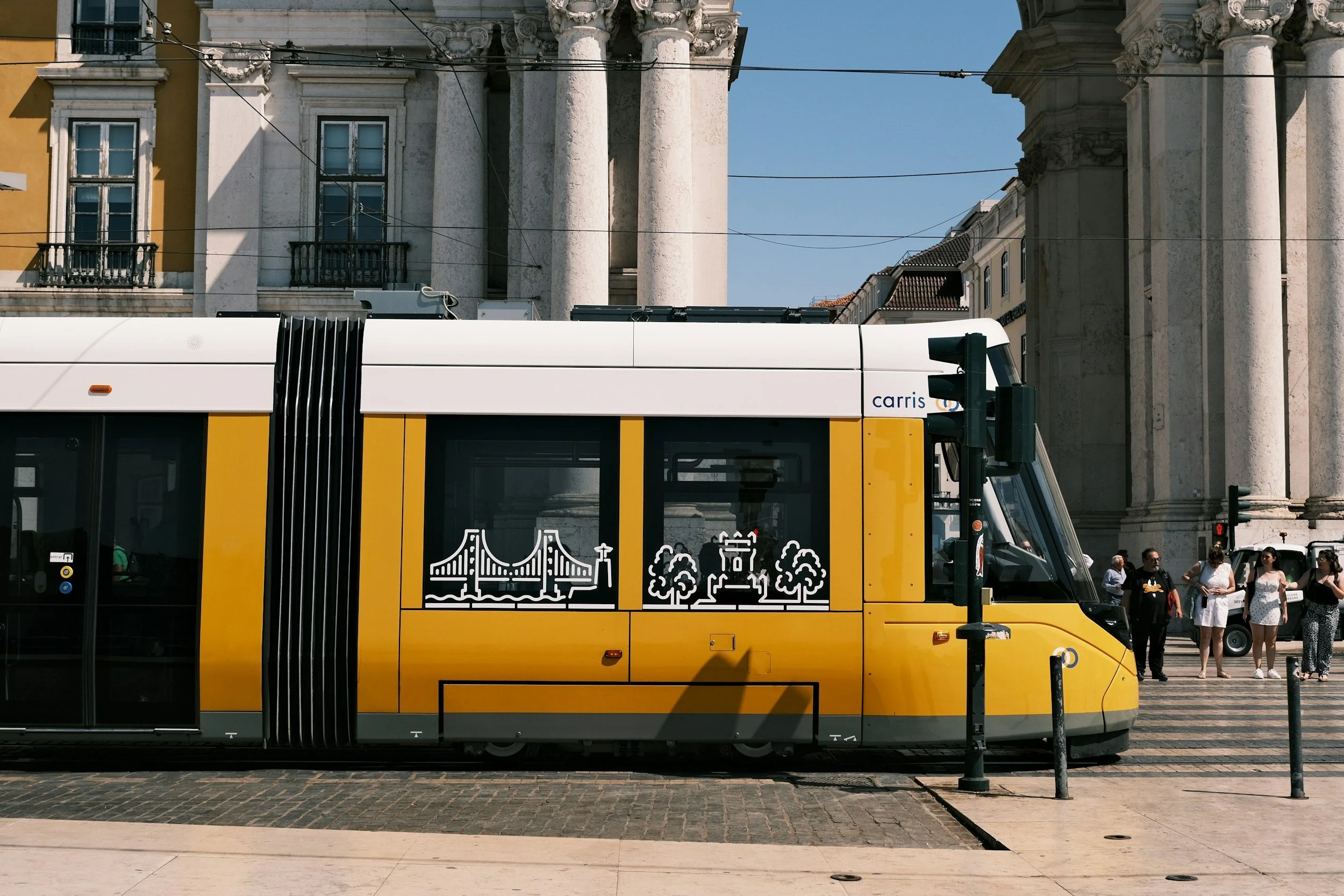
Lisbon is famous for its charming yellow Remodelado trams that have kept many of their 1930’s features. Though you are sure to find them quaint, the novelty will soon wear off. They are slow, hot, loud and uncomfortable. These trams that were once for locals have been overtaken by tourists, especially the 28 tram.
Tram 28 passes through all the iconic neighbourhoods but it is now almost always completely jammed with tourists (many who pretend not to see an elderly Lisboeta just trying to get home, so they can keep a good seat/view!). Queues to get on are stupidly long and slow. The 28’s cramped conditions has earnt it the reputation for being the number one spot to get pick-pocketed in the city. If I’ve turned you off, good. Mission accomplished. If not, do so at your peril & ffs give your seat to a local who needs it.
In stark contrast we also have a larger, modern one, the E15, servicing western Lisbon more or less along the river. Comfortable, quiet and clean, it runs from the centre of town in Baixa and ends in Alges.
Bestie Tip: The E15 is the most direct (& pleasant) way to get to & from main square, Praca do Commercial, to Belem.
Company: All trams are run by Carris.
Timetables: The nature of city traffic makes timetables pointless. For real-time updates, use the Carrisway app mentioned above.
On & Off original trams: You can only enter and swipe your card at the front. You can pay in cash if you wish, but often the driver will be miffed as you’re now holding him up (and don’t even try with the unpleasant driver of the number 24). Give as close to the correct amount as possible. Exit at the back only. It is cutomary for those standing to make your way down, bit by bit, ahead of your stop.
On & Off E15 trams: Enter anywhere, swipe your card on any pole validator near the doors inside. Exit anywhere.
Funiculars: There are 3 for the extra steep hills: Lavra, Bica and Glória. It would be remiss of me to not mention the tragic crash the Glória’s tram had in September 2025, which resulted in the death of 16 people and been closed since, though it has been given the green light to reopen in the coming months.
Ferries
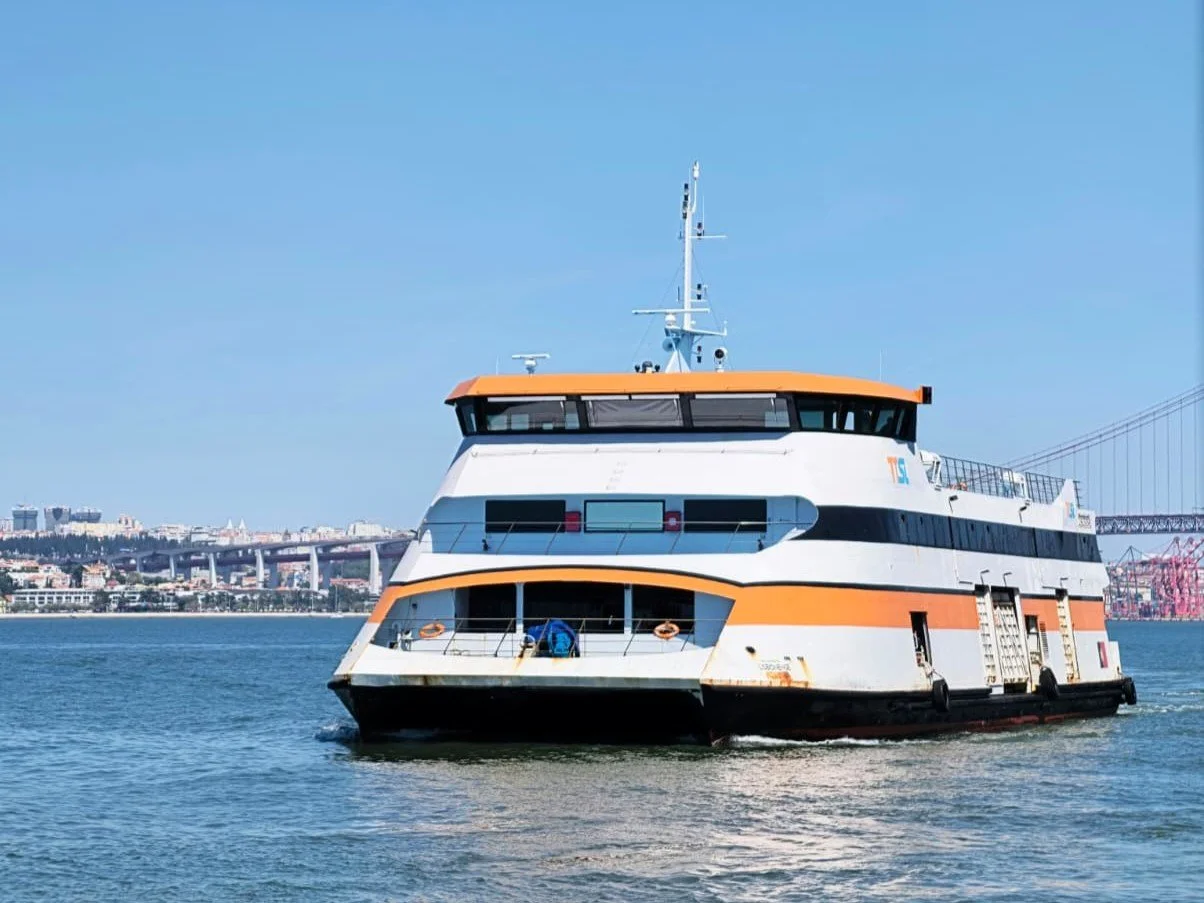
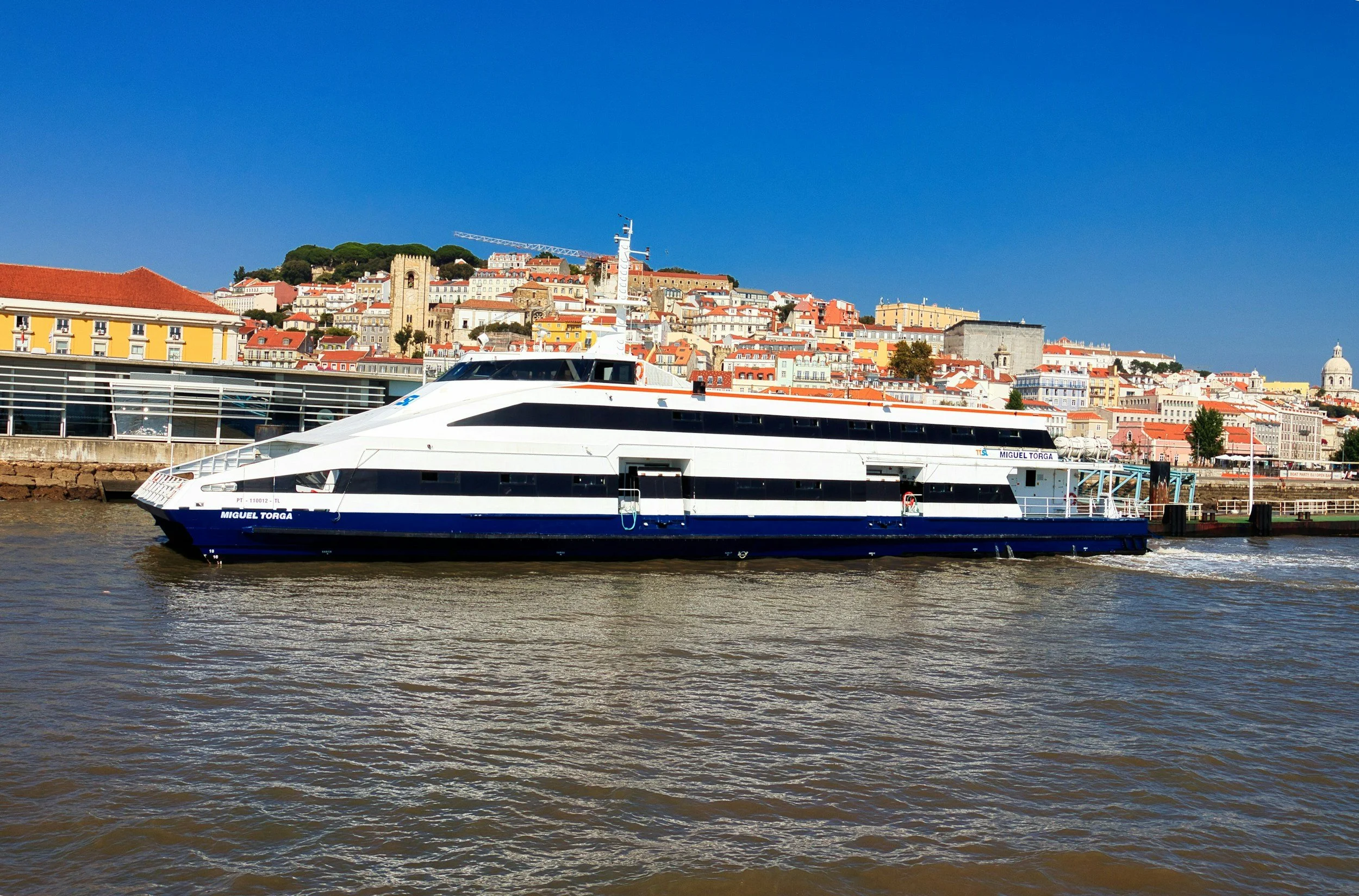
This is the best way to cross the Rio Tejo to the south bank, especially when the traffic for the Abril 25 Bridge is at it’s worst. (Also see the Fertagus train further below.)
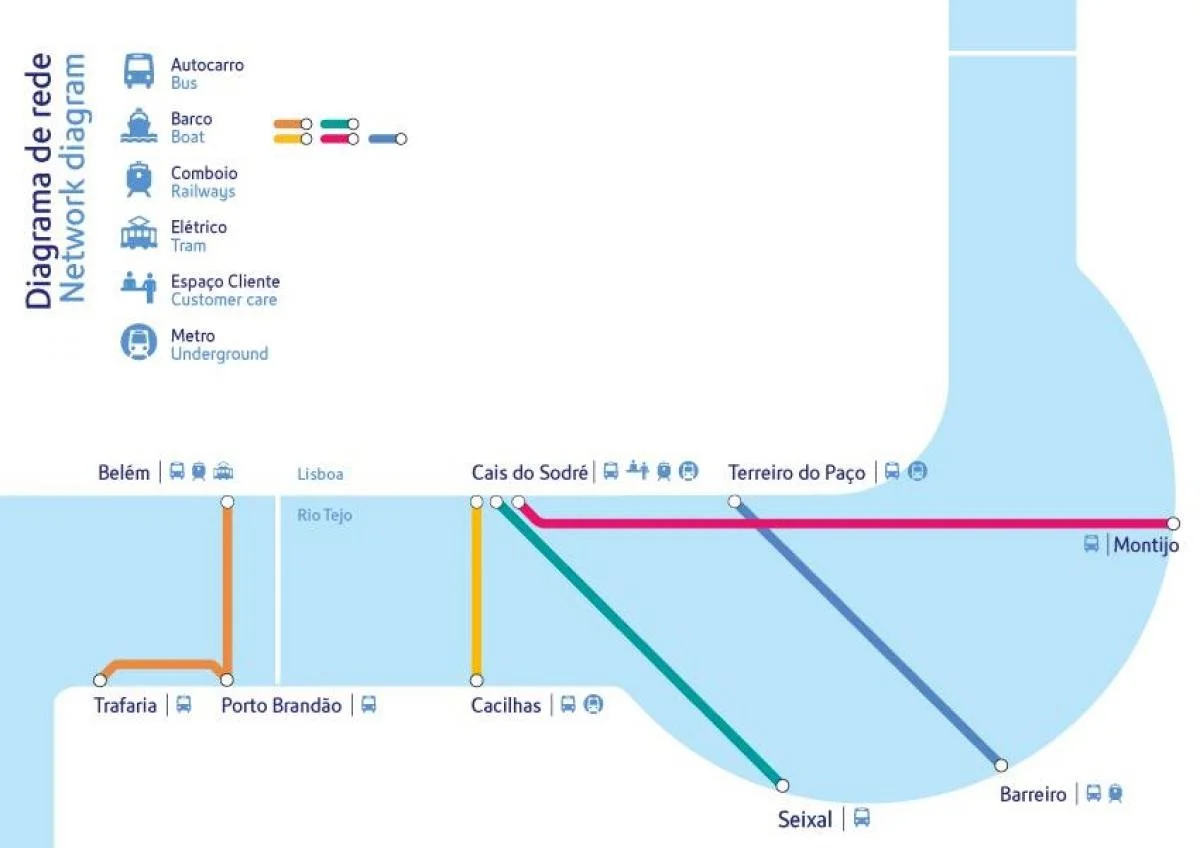
The most popular yellow line is about 10-15 minutes, all others are about 20 - 30 minutes.
Company: Transtejo Soflusa
Timetable: You can choose the timetable for your desired line here. You can get live ferry updates on the home page.
On & Off: There are entry gates to swipe your card or ticket before boarding.
Bestie tip: Used by commuters, it’s best when possible to avoid jamming up the already busy >Lisbon 8-10am and <Lisbon 5-6pm weekday ferries.
Trains For Over The River
Fertagus Line: You can avoid ferries altogether by taking the Fertagus line, which runs all the way from Roma-Areeiro all the way to Setubal, crossing the Tejo via the Abril 25 bridge. You can find the timetable in english here. If you are a regular user of this line, you can get the Pick Hub app to pre-buy single tickets online or top up your Navegante Card. If not, don’t bother with yet another bloody app, just use you your Navegante Card as usual or buy a single ticket in person at one of the 9 ticket offices or the vending machines at all stations.
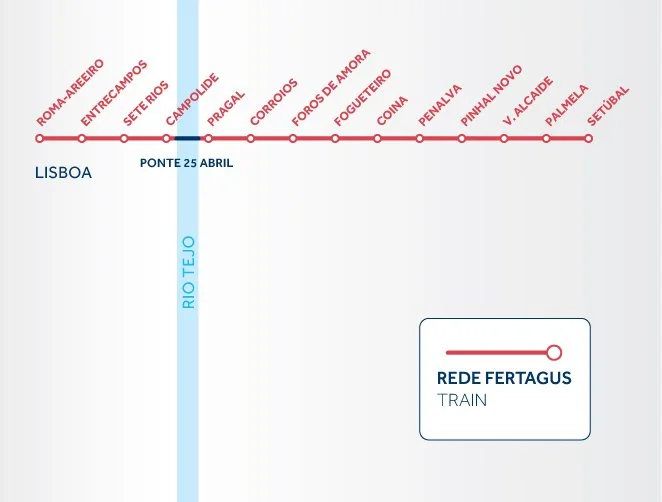
Metro Transportes do Sul: The first Fertagus stop over the river, Pragal, and the yellow ferry line which takes to Cacilhas, both give you access to the metro owned by yet another company, MTS. To see the network they cover, click here. And to look up a timetable go here.
Sado Line: Part of the CP train group. If you go by blue ferry line to Barreiro, you can connect to the urban Sado line which takes you as far as Pinhal Novo. The Sado timetable is here.
Reduced Mobility
For besties with any physical restrictions, Lisbon's public transport is shockingly sub-par. Add that, cobblestones and hills which are a challenge for even the most able-bodied people means careful planning will be needed before any trip. Service dogs for the vision impaired are allowed everywhere.
Metro trains: Only 31 of the 52 Metro train stations provide full accessibility with escalators and/or lifts, though every stop on the Red Line from the airport is technically fully accessible. If you go to the metro map, you can see the stations with disabled symbol for access. Having said that, stations all over the network have an embarrassing amount of lifts and escaltors out-of-service on a regular basis.
For this reason I highly recommend using Willeasy to know you which stations have what access available and real-time info on what is working.
Urban trains: Information regarding assistance for for the urban (and long distance) trains is here. You can also call +351 707 210 746 at anytime, though I am unsure regarding english speaking operators. Major stations like Rossio & Oriente are accessable.
Buses: All buses have lowered floors and 80% have access ramps at the middle door. They all have space for a wheelchair. You can read more about bus accessibility here. You can also click the link for information regarding the door-to-door mini bus service, which operates by appointment, for anyone with 60% (or more) declared disability.
Trams: The original trams are not accessable. The modern E15 is perfectly accessible via the carriage entrances marked with a blue disabled badge.
Ferries: Many vessels and docks have stable ramps and specialized equipment to accommodate wheelchair users, though crew may need to assist you.
Tourists & visitors with reduced mobility: If you have vistors with accessibilty needs, there is a tour company that caters to that: Adapted Tours Portugal. There is also a travel website with many destinations worldwide, including Lisbon & Sintra called Disabled Accessible Travel, incase you didn’t already know.
Tickets & The Navegante Card
The payment options differ depending on the transport you’re taking. I have made the below grid to help.
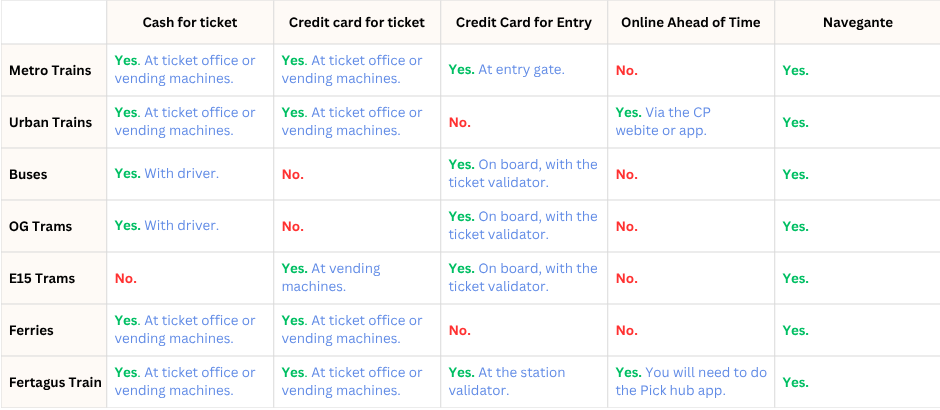
As you can see, the Navegante card is your friend.
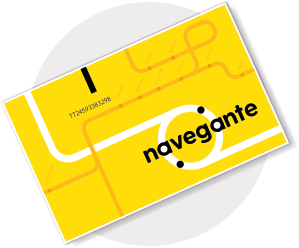
Navegante Ocasional
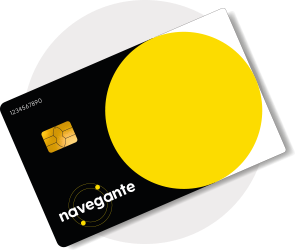
Navegante Personalizado
The Navegante card is a reloadable smart card for pre-paid travel credit that can be used on all public transport operators in the Lisbon Region, meaning you only need this card for all metro, buses, trams, funiculars, urban trains, and ferries. Visitors can get a temporary carboardy “navegante occasional” for .50c but it’s best that residents get the €7.00 personal permanent one, “navegante personalized”, which can only be used by the cardholder, and far more durable.
Bestie Note: If you see the term “viva” or “viva viagem”, this is the old name for the Navegante card and means the same thing.
Getting Your Navegante:
There are two ways to get the Navegante Personalizado:
Online using this form. Information regarding pricing and delivery times is also in the link.
In person at any of the ticket offices below, between 07:45 a.m - 08:30 pm any day.
The documents you need to bring are:
Identity Card (EU citizens), Residence Permit (non EU citizens), or Passport (Portuguese citizens).
Original passport photo in colour (the image will be on the back of the card).
The required form, already filled out. Here it is in English.
If you do not have an EU Identity Card and don’t yet have your Residence Card yet, you can still get the yellow Navegante Ocasional in the meantime. Or just do single tickets.
Loading Credit Onto The Navegante:
“Zapping” is the act of loading money onto the Navegante. You can do this at any of the vending machines or ticket offices at metro stations and ferry terminals.
If/when you have a Portuguese bank card, an easier way to zap is via the carrisway app. You simply hold your navigante against the back of your phone and pay by mbway. This is especially handy if you need to zap credit for a bus or tram when you are not near a vending machine or ticket office. Again, here is the Carrisway app for Android & iOS.
Once you have loaded onto the card, you now have a balance. The cost of your trip is deducted from the remaining balance on your card.
Another popular option, especially for commuters is the “frequent journeys” monthly zap. €40 (only €20 for 65+) gives you the unlimited amount of travel for the calendar month. You can buy the following month only available from the 26th onwards (e.g., for the month of June, the Navegante Pass can be bought starting on May 26th).
Prices:
At the time of publishing, here are the ticket prices for 2026, but generally, you will pay €1.72 per ride on buses and trains using your Navegante.
Without a Navegante, individual tickets are €1.90, and pay as you board on Carris transport will increase the price again, as can be seen here.
Tourists & Visitors:
24hr tickets or a popular option, for unlimted travel for €7.25. You can refer to this handy pdf with clear instructions in English on how to get your 24hr pass.
You could also get the Lisboa Card. For the following prices you get free, unlimited access to Lisbon public transport and 52 museums & monuments. In my opinion, this is economically not worth it unless you will be seeing & travelling a lot in short space of time. But if you’re feeling flush it’s a good way to go & see what want without the hassle of individual purchases.
The 24-hour Lisbon Card costs €31.00.
For 48 hours - €51.00
72 hours - €62.00.
Children’s discounted prices are €21.00, €28.00 and €35.00, respectively.